Tuesday, December 25, 2012

Kuladeivam குலதெய்வம்


ஜோ‌திட ர‌த்னா ‌வி‌த்யாதர‌ன்: பொதுவாக இறைவழிபாடு நல்லது. முதன்மை வழிபாடு குலதெய்வம். தினசரி நினைத்துக் கொள்வது என்பது நல்லது. ஏனென்றால் பலருக்கும் குல தெய்வம் காடு, மலை, வயல்வெளி, சாலை வசதி இல்லாத இடங்களில்தான் இருக்கிறது. அதனால் எப்போதும் சென்றுவர முடியாது. ஆனால் குலதெய்வ வழிபாடு என்பது முக்கியம். வருடம்தோறும் இரண்டு முறையாவது அவரவர்களுடைய குலதெய்வக் கோயிலிற்குச் சென்று வருவது நல்லது.


இதுதவிர, தசா புத்திகளை அடிப்படையாக வைத்து இந்த திசையில் இந்த தெய்வங்களை வழிபட்டால் நல்லது என்று சொல்கிறோம். உதாரணத்திற்கு, செவ்வாய் திசை, குரு திசை நடக்கும் போது முருகரை விடாமல் வழிபடுங்கள். கந்த சஷ்டி கவசத்தைப் படியுங்கள் என்று சொல்கிறோம். இதில் முதன்மை வழிபாடாக மூலவர், முதல்வர் விநாயகருக்கு கொடுப்போம்.

இஷ்ட தெய்வம், குல தெய்வம், தசா புத்தி தெய்வம் என்று பல தெய்ங்கள் உண்டு. சிலரிடம், நீங்கள் சிவ வழிபாடுதான் செய்ய வேண்டும் என்று சொல்வோம். அதற்கு அவர்கள், நீங்க என்னதால் சொன்னாலும் திருப்பதிக்கு போகாமல் இருக்க முடியாது. மாதத்திற்கு ஒரு முறையாவது திருப்பதிக்கு போய் வருவேன் என்று சொல்வார்கள். ஆகையால், இஷ்ட தெய்வம் என்று ஒன்று வருகிறது. அவர்கள் இஷ்ட தெய்வங்களை நினைத்துக் கொள்ளலாம். ஏனென்றால், சிலருக்கு அவர்களுக்கு பிடித்த இடங்களுக்குச் சென்றால் திருப்தி உண்டாகும். இதுபோல அவர்களையும் மீறி ஒரு சக்தி அவர்களுக்கு நிம்மதியைத் தருவதாக உணர்வார்கள். அதன்படி வணங்கிக் கொள்ள வேண்டியதுதான்.......

எங்களுடைய குலதெய்வம் பச்சைஅம்மா - Near Perampakkam

குலத்தைக் காப்பதால் தான் குலக் கடவுள்


குலத்தைக் காப்பதால் தான் குலக் கடவுள் . மற்ற கடவுள்களுக்கு இல்லாத சிறப்புப்பெயர் குலதெய்வத்திற்கு மட்டும் தான் உண்டு. ‘குலம் தழைக்க வேண்டும், முன்னோர் சாந்தி அடையவேண்டும், பின்னோர் செழிக்க வேண்டும்’ என்று நம் முன்னோர்களால் வழிபடப்பட்ட குல தெய்வத்தின் அருள் நம் மீது பட்டால் துன்பங்கள் பறந்திடும். பல பிரச்சினைகளில் சிக்கி உழல்பவர்கள், பரிகாரம் போன்ற முயற்சிகளில் இறங்கும் முன் குலதெய்வத்தை நேரில் சென்று வழிபட்டு அதன் பின்னர் தொடங்கவும்.

குலதெய்வம் என்பது வாழையடி வாழையாக, தலைமுறை தலைமுறைகளாக நம் முன்னோர்கள் வழிபட்டு வருவது. அய்யனார், சுடலை மாடன் என்று பல (கிராம) தெய்வங்கள் உண்டு. பல ஊர்களில் அங்கு வலுவான ஒரு காரணத்தால் மரணமடைந்தவரின் பெயரில் கோவில் ஒன்றை எழுப்பி அதை அவ்வூரின் ஒரு சாரார் குலதெய்வமாக ஏற்று வழிபடுகின்றனர். (உதாரணமாக ஊரைக் காக்க கள்ளர் அல்லது எதிரிகளுக்கு எதிராக சண்டையிட்டு வீரமரணம் அடைந்தவர்கள்) பெரும்பாலான குல தெய்வங்களுக்கு பின் இம்மாதிரி ஒரு நிகழ்வு இருக்கும்.


குலதெய்வ வழிபாடு;
----------------------------
நம்முடைய சமுதாயத்தில் ஒவ்வொரு குடும்ப வகைகளுக்கும்,ஒவ்வொரு குல தெய்வம் இருக்கும்.இவர்களுக்கு காவல் தெய்வம்,குல தெய்வம் வழிபாடு இருக்கும்.பிறக்கும் குழந்தைகளுக்கு,முதல் முடி குல தெய்வம் கோயிலில் சென்று மொட்டை போடுவார்கள்.சில்ர் காது குத்துவார்கள்.

குலதெய்வம் வழிபாடு இந்து சமயத்தினருக்கும் முக்கியமான ஒன்றாகும்.அடிப்படையில் நம்முடைய இந்து மதம் பற்றற்ற தன்மையை போதிக்கிறது.குல தெய்வ வழிபாடு மனிதனின் லௌதீக வாழ்க்கைக்கு அடிப்படையாக அமைகிறது.அப்படியானால் குலதெய்வமும்,இறைநிலையும் வேறுவேறா?அப்படி கிடையாது,அதாவது பகவத்கீதையில் பகவான் கிருஷ்ணரே இதை தெளிவாக சொல்லியிருக்கிறார்.

உலகத்தில் இன்பத்தையும்,பற்றையும் ஒதுக்கிவிட்டு வாழ்வதற்கு எல்லொராலும் முடியாது,லௌதீக வாழ்வு வாழ்வபவர்களுக்கும் தான் இறைதூதர்களையும்,தேவதைகளயும் இறைவன் படைத்திருக்கிறார்.அவர்களே குலதெய்வங்கள் ஆவார்கள்.

குல தெய்வத்தை கும்பிடும் ஒரு கூட்டத்தை சேர்ந்தவர்கள்,முழுவதும் பங்காளி ஆவார்கள்.இவர்கள் அண்ணன்,தம்பி உறவு முறையாக கருதுபவர்கள்.இவர்களுக்குள் பெண் கொடுக்கவோ,எடுக்கவோ மாட்டார்கள்.

மேலும் நம்முடைய வீட்டில் எந்த சுபகாரியங்கள் செய்தாலும்,முதலில் குலதெய்வத்தை வணங்கிவிட்டுதான் ஆரம்பிக்கவேண்டும்.எந்த ஒரு நல்ல காரியத்திற்க்கும் குலதெய்வ வழிபாடு முதலில் செய்து முடித்துவிட்டு ஆரம்பித்தால் அது வெற்றியாக முடியும்.மேலும் வருடந்தோறும் நம்முடைய குலதெய்வத்தை வழிபடுவதால் நன்மைகளும்,சந்தோசங்களும் குடும்பத்தில் நிலவும் என்பது உண்மை.


பெருகிவரும் குலதெய்வ வழிபாடு 

by ஜெகதீஸ்வரன்

இந்து மதத்தின் ஈடு இணையற்ற வரலாற்று சின்னங்களில் குலதெய்வங்களும் ஒன்று. தமிழர்களின் பழங்கால பண்பாடுகளை எடுத்து சொல்ல இன்னமும் வரலாற்று ஆய்வாளர்கள் குலதெய்வ வழிபாட்டை நம்பியிருக்கின்றார்கள். சைவர்களும், வைணவர்களும் சில குலதெய்வங்களை சிவனாகவும், விஷ்னுவாகவும் மாற்றி விட்டாலும் பெரும்பாலான குலதெய்வங்கள் தன்னிலை மாறாமல் இருக்கின்றன. அவற்றின் மகிமை உணர்ந்து வருடம் தோறும் குலதெய்வ வழிபாடு மக்களிடையே பெருகி வருகிறது.

நம் முன்னோர்கள் –

குலதெய்வங்கள் என்பவை வெறும் கதைகளால் தோற்றுவிக்கப்பட்டதோ, ஆகாசத்திலிருந்து குதித்தவையோ அல்ல. அவை நம் முன்னோர்கள். தங்களை காப்பாற்றியவர்களையோ, தங்கள் காலத்தில் வாழ்ந்த சிறந்த மனிதர்களையோ நம் பெரியவர்கள் நமக்கு ஞாபகம் செய்ய குலதெய்வங்களாக வழிபட்டு வந்திருக்கின்றார்கள். வெள்ளாளர்களின் வரலாறு சொல்லும் பழைய நூல்களில் எல்லாம் நீலி கதையும் சொல்லப்பட்டிருப்பதாக அறிந்து வியந்து போகிறேன்.

மதுரைவீரன், கருப்பு, பெரியசாமி, செல்லாயி, மருதாயி என நம் முன்னோர்களின் பெயர்கள் அனைத்தும் குலதெய்வத்தினை சார்ந்தே இடப்பட்டிருக்கின்றன. நம் முன்னோர்களின் வாழ்க்கையோடு பின்னிபினைந்த வழிபாட்டு முறைகளையும், கதைகளையும் பற்றி கிராமங்களில் வாழ்ந்தவர்களுக்கு தான் தெரியும்.

அழிவு –

தெய்வங்களை அரசியலாக்கிய காலகட்டத்தில், திடீரென வெளிபட்ட பார்பாணிய எதிர்ப்பினால் அதிகம் பாதிக்கப்பட்டது குலதெய்வங்கள் தான். பல சிறு தெய்வங்களின் வரலாற்று உண்மைகள் தெரியாமல் போய்விட்டன. அவற்றின் முக்கியத்துவத்தினை உணராமல் பல கோயில்கள் பராமரிக்கப்படாமலும், அழிந்தும் விட்டன.

குலதெய்வம், மதுரைவீரன் என வரலாற்றை சொல்லி வந்த திரைப்படத்துறை கூட பின்நாளில் மாற்றம் கண்டுவிட்டது. விருமாண்டி என்ற தெய்வத்தின் பெயரை வைத்து எடுக்கப்பட்ட படத்தில்கூட அதன் வரலாற்றை சொல்லாமல் விட்டுவிட்டார் கமல். சர்ச்சைக்கு உள்ளான அந்த படத்தின் ஒரு வில்லு பாட்டில் விருமாண்டி வரலாற்றை அறிந்தேன். அந்தப் பாடல் படத்தில் இடம் பெறாமலே போய்விட்டது.

இப்படி எல்லா தரப்பும் செய்த சதியால், சில தமிழர்களுக்கு குலதெய்வ பெயரைத் தவிர மற்ற எந்த செய்தியும் தெரியவில்லை. அதிலும் சிலருக்கு தெய்வங்களின் பெயர்களும் கூட தெரிவதில்லை. இது மிகவும் வேதனையான செய்தி. நம் முன்னோர்களின் வரலாறுகளை நாம் அறிந்து கொள்ளாமல் இருக்கின்றோம்.

மாசி பெரியண்ண சாமி பற்றி படிக்க -

கொல்லிமலை மகிமைகள்
பெரியசாமி கதை கோயில் படங்களுடன்
மாசி பெரியண்ண சாமி் (விக்கிசோர்சில்)

(நன்றி – நண்பர் ஞானப்பித்தன் (எ) வெற்றிக்கதிரவன் அவர்கள் லிங்க் பற்றி ஞாபகம் செய்தமைக்காக)

மறந்துவிட்ட மீடியாக்கள் –

மகாபாரதத்தையும், ராமயணத்தையும் மட்டும் மீண்டும் மீண்டும் பல வடிவங்களில் ஒளிபரப்பு செய்யும் மீடியாக்கள் சிறுதெய்வங்களின் வரலாற்றையும் பதிவு செய்து ஒளிபரப்பினால் நன்றாக இருக்கும். சிறுதெய்வங்களின் கதைகளில் தியாகம், வீரம், அன்பு, அறிவு என பல விதமான சுவைகள் இருக்கின்றன. என்னுடைய குல தெய்வத்தின் வரலாற்றை எப்படியோ அறிந்துகொண்டேன். ஆனால் மற்ற தெய்வங்களின் வரலாற்றை கண்டறிய கொஞ்சம் சிரமாக உள்ளது. நண்பர்களுக்கு அவர்களின் தெய்வங்களைப் பற்றி தெரியவில்லை.

குலதெய்வம் பற்றி வலையில் தேடினால் பெரும்பாலும் எம்.ஜி.ஆரின் படத்தினைப் பற்றிய செய்தி தான் வருகிறது. அப்போதும் சில பெரியவர்கள் இட்ட குலதெய்வ கட்டுரைகளை சேமித்து வைத்து படித்துக் கொண்டிருக்கிறேன். ஆனால் அவை மிக சொற்பமான அளவே இருக்கின்றன. சிறு தெய்வங்களின் கதைகள் சொல்லும் புத்தகங்களை தேடிக் கொண்டிருக்கிறேன். முடிந்தால் எல்லாவற்றையும் இணையத்தில் வெளியிடுவேன்.

ஆவணப்படுத்துங்கள் –

ஒரு தனி மனிதனாக எல்லாவற்றையும் ஆவணம் செய்ய இயலாது. உங்களுடைய குலதெய்வத்தினை பற்றி முழுமையாக அறியுங்கள். அதன் வழிபாட்டு முறைகள், வரலாற்று கதைகள் என எல்லாவற்றையும் ஆவணப்படுத்துங்கள். வலைப்பூக்கள் தொடங்கியுள்ள நண்பர்கள் இந்த பணியை செம்மையாக செய்துவிடுவார்கள். சிலர் செய்து கொண்டும் இருக்கின்றார்கள்.

வலைப்பூக்களில் எழுதி பழக்கமில்லாதவர்களும், வலைப்பூகளை தொடங்காதவர்களும் கீழ்கண்ட வழிமுறைகளை பின்பற்றுங்கள் -

தமிழ் எழுதியான என்.எச்.எம்ஐ உங்கள் கணினியில் பதிவிரக்கம் செய்து கொள்ளுங்கள். இது மிகவும் எளிமையான தமிழ் எழுதி, தட்டச்சு பலகையின் மாதிரியும் இதோடு உள்ளது. (மற்ற தமிழ் எழுதிகளின் இணைப்புகள் இந்த தளத்திலே இடது புறமாக கொடுக்கப்பட்டு உள்ளது).

உங்கள் குலதெய்வ வழிபாட்டு முறை, சிறப்பான பெயர்கள், வரலாறு, அமைவிடங்கள் என எல்லாவற்றையும் தமிழில் எழுதிக் கொள்ளுங்கள்.

Thank:
https://sagotharan.wordpress.com/2009/12/08


https://saathesh.blogspot.com/2012/09/blog-post.html
https://karthikai.com/2011/12/06/kula-deivam/


Thanks & Regards
ஹரிமணிகண்டன்
Harimanikandan .V


ஓம் சிவசிவ ஓம்

Dr.Mystic Selvam Om Shiva Shiva Om Mp3                  

(-)o-o(-)(Be Good & Do Good)(-)o-o(-)


Siva Panjatcharam


ஐந்து எழுத்து மந்திரம் 


ஐந்து எழுத்துக்கள் (அட்சரங்கள்) அமையப் பெற்றிருக்கும் மந்திரம்!


ந + ம + சி +வா + ய!
மேலோட்டமான பொருள்: நம (வணங்குகிறேன்), சிவாய (சிவனை)!

நுட்பமான பொருள்: (முன்பு அடியேன் ஓம் நம நாராயணாய என்னும்திருவெட்டெழுத்துக்குச் சொன்னது போலத் தான்...)
ந+ம =இல்லை+எனது=எனதில்லை
சிவாய = (அனைத்தும்)சிவனுடையதே!
பஞ்சாட்சரதத்துவம் மிகவும் பெரிது! திருமூலர் திருமந்திரத்தில் இதைப் பலவாறு விளக்குவார்!பஞ்சாட்சரமே மொத்தம் ஐந்து வகையாய் இருக்கு!
ஆமாம் மொத்தம் ஐந்து வகையானஐந்தெழுத்து! இதோ.....


நமசிவாய = ஸ்தூல பஞ்சாட்சரம்
சிவாயநம = சூட்சுமபஞ்சாட்சரம்
சிவாயசிவ = கரண பஞ்சாட்சரம்
சிவாய = மகா கரண பஞ்சாட்சரம்
சி =முக்தி பஞ்சாட்சரம்

எங்கும், எப்போதும், எந்தக் காலத்திலும், ஆண் பெண்பேதமின்றி, சாதி மத பேதமின்றி, தீட்டு/பூட்டு என்றெல்லாம் பேசிக் கொண்டிராமல், யார்வேண்டுமானாலும் துதி செய்யவல்லது இந்தத் திருவைந்தெழுத்து! 


குளித்தோ, குளிக்காமலோ, உடுத்தியோ உடுத்தாமலோ, உண்டோ, உண்ணாமலோ எப்போது வேண்டுமானாலும் ஜபிக்கவல்ல மந்திரம் இது!
இதன் பெருமையைப் பலரும் போற்றி உள்ளனர். திருமூலர்சிவசிவ என்று சிந்தித்து இருந்தால் தீவினை எல்லாம் தீரும் என்கிறார்


திருவைந்தெழுத்தின் பொருமையை திருமந்திரம் குறிக்கையில்
‘அஞ்ந்தெழத் தாலைந்து பூதம் படைத்தனன்
அஞ்ந்தெழத் தாற்பல யோனி படைத்தனன்
அஞ்ந்தெழத் தாலிவ் வகலிடந் தாங்கினன்
அஞ்ந்தெழத் தாலே மெர்ந்துநின் றானே’
குறிப்பிடுகின்றார். திருவைந்தெழுத்தின் ‘ம’காரத்தினால் உலக படைக்கப்பட்டது. ‘ய’காரத்தால் உடலும் உயிரும் இணைந்து விளங்குகின்றது. யோனியான உயிர் நகர அடையாளத்தால் விரிந்த உலகத்தை இயைந்து யாக்கிக் காக்கும் நடுநிலைமை விளங்கும் ‘சி’காரம் ‘வ’கார அடையாளங்களால் எல்லாமாய் அமர்ந்தமை விளங்கும் என குறிப்பிட்டுள்ளார். அஞ்தெழுத்து உலகத்தை ஆக்க வல்லது என்பது புலணாகும்.
அஞ்செழுத்து பந்தத்திலிருந்து விடுலையளிக்கும் என்பதை
‘வீழ்ந்தெழ லாம்விகிர் தன்திரு நாமத்தைச்
சோர்ந்தொழி யாமல் தொடங்கும் ஒருவர்ற்குச்
சார்ந்த வினைத்துயார் போகத் தலைவனும்’ 
போந்திடும் என்னும் புரிசடை யோனே
திருவருட் துணையால் திருவைந்தெழுத்தை முறையாக ஒதுவதனால் உலகியல் நுகர்வுடன் அதன் கண் தொடக்கின்றி வாழ்தலுமாகும். புpறவிப் பெருந்துயர் நீங்கத் தம் முதல் முருவுமாய் வந்தருலுவான். புரிகடையோன் என்னும் போது புரி 10 சடையோன் என்பது திருவாதிரை நாளை விரும்புபவன் என்றும் ஒன்றாய் வேறாய் உடனாய் விரும்பி உறையும் பண்பினேன். என்பது பொருள்.

திருவைந்தெழுத்தால் எல்லாவுலகமும் ஒழுங்காக நடைபெறுகின்றது. என்பதை
ஐந்தின் பெருமையே அகலிட மாவது
ஐந்தின் பெருமையே ஆலய மாவது
ஐந்தின் பெருமையே யறவோன் வழக்கமும்
ஐந்தின் வகைசெயப் பாலனு மாமே’
திருவைந் தெழுத்தின் சிறந்த திருக்குறிப்பே திருக்கோயிலாகும். அதில் ‘சி’காரம்; சிவலிங்கமாகும். ‘வ’காரம் அடுத்த மண்டபமாகிய மனோன்மணி நிலை. ஆனேற்று நிலை ‘ய’காரம். அம்பலவாணர் நிலை ‘ந’காரம். பலிபீடம் ‘ம’காரம் அவ்வாறு பெருமை பெற்றது திருவைந் தெழுத்து.
ஓர்எழுத்தான ஓமிலிருந்து பஞ்சபூதங்களானான் ஐந்தெழுத்தில் என்பதை திருமந்திரம்
‘வேரெழுத் தாய்விண்ணாய் அப்புற மாய்நிற்கும்
நீரேழுத் தாயநில ந்தங்கியும் அங்குளன்
சீரெழுத் தாய்அங்கி யாயுயி ராமெழுத்து
ஓரெழுத் தீசனும் ஒண்சுட ராமே’ 
விண் ‘வ’காரமாயும் நீர் ‘ம’ காரமாயும் நிலம் ‘ந’ காரமாயும் தீ ‘சி’ காரமாயும் காற்றாகி உயிரெழுந்து ‘ய’ காரமாயும் உள்ளவன் சிவன் ‘வமநசிய’ என்பதில் அடங்கும்.
திருவைந்தெழுத்தல் ‘ந’காரமே உலகை உருவாக்கும் என்கின்றது திருமந்திரம்

‘நாலாம் எழுத்தோசை ஞாலம் உருவது
நாலாம் எழுத்தினுள் ஞாலம் அடங்கிற்று
நாலாம் எழுத்தே நவிலவல் லார்கட்கு
நாலாம் எழுத்தது நன்னெறி தானே’ 

உலகம் அடங்கி அதன் ஆணைப்படி நடக்கும் ‘நமசிவாய’ என ஓதுவார்க்கு நன்நெறி செல்லும் வெல்வர்களாவர்.


அகாரம் உயிரே உகாரம் பரமெ
முகாரம் மலமாய் வருமுப் பதத்திற்
சிகாரம் சிவமாய் வகாரம் வடிவமாய்
யகாரம் உயிரென் றறையலு மாமே’

உயிரெனக் குறிக்கும் உடல் மெய் இருபத்திநான்கும் அகாரமாகும். புரமென குறித்து உணர்ந்து மெய் ஐந்தும் உகாரம் மாகும். முலமெனக் கூறிய உணர்வு மெய் ஏழும் மகாரமாகும். இம் முப்பத்தாறும் மெய்களுள் சிகாரம் கிவமாய் உயிருக்குயிராய் வகாரம் சிவனின் திருமேனியாய் யகாரம் திருவருளாகும். ஏனக் குறிப்பிட்டுள்ளார்.

‘நகார மகார சிகார நடுவாய்
வகாரம இரண்டும் வளியுடன் கூடி
ஒகார முதற்கொண்டு டொருகால் உரைக்க
மகார முதல்வன் மனத்கத் தானே’

நமசிவாய என்பதில் சிகாரம் நடு இரண்டு வளி என்பது இடபால் வலபால் மூச்சு என உயிர் அடையாளமான யகாரத்தைக் குறிக்கின்றது. ஓம் எனும் மந்திரத்துடன் சேர்த்து நமசிவாய மந்திரத்தை ஓம் நமசிவாய என ஓத சிவப்பரம் பொருள் நெஞ்சகத்தே கோயில் கொள்வான் என்கின்றது திருமந்திரம்.

சிவபெருமானின் மந்திரவுருவை கூறுகையில்
‘சிவாயவொ டவ்வே தெளிந்துளத் தோதச்
சிவாயவொ டவ்வே சிவனுரு வாகுமஞ்
சிவாயவொ டவ்வுந் தெளியவல் லார்கள்
சிவாயவொ டவ்வே தெளிந்திருந் தாரே’

‘சிவய’ என்பதுடன் முதலாக ‘சிவ’ என்பதைச் சேர்த்து ‘சிவயசிவ’ என்பதே சிவபெருமானின் மந்திரவுருவாகும். இதனை தெளிந்தார் ‘சிவசிவ’ என சிந்திப்பர். இதனை ‘ஓம் சிவ சிவசிவ சிவயசிவ சிவாயநம மசிவாயந நமசிவாய யநமசிவ வயநமசி சிவசிவ சிவசிவ ஓம்’ என்று உட்சாடணம் செய்வதனால் இம்மந்திரத்தின் உன்னதபலனை பெறமுடியும் என்பது தின்னம்


Thank:https://aanmikam.blogspot.com/2011/02/blog-post_6926.html
         https://janahang.com/kumar/?p=882


Thanks & Regards

Harimanikandan.V
Sadhanandaswamigal Blogspot


ஓம் சிவசிவ ஓம்

                   Kagapujandar - Siva Panjatcharam Mp3
ஓம் சிவயநம‌யநமசிவ‌வயநமசி , நமசிவய‌,சிவயசிவ‌ ஓம்

(-)o-o(-)(Be Good & Do Good)(-)o-o(-)


Thursday, December 20, 2012

Sri Eswarapattar Swamigal Maha Guru Pooja 2013


 Sri Eswarapattar Swamigal  Maha Guru Pooja 2013

                                  
Satguru Sri Eswarapattar Swamigal Whose odukum at Palani was a saint born in a Kannada speaking family. His young age was in Andhra and has his odukkam at Tamilnadu. His Jeeva samadhi Palani.


Sri Eswarapattar Swamigal  is one of Guru to Dr. Mystic Selvam ayya , in his “ Kaala dosha nivaaranam Prayoganm ” speech. Just hear Mystic Selvam ayya speech for 2 minutes “ https://www.mediafire.com/download.php?4f4jdf7u7ox94pn ” (2mb) .


Mystic ayya said when we keep photo Sri Eswarapattar Swamigal (above pic) and just say “ Om Eswarapattar Namaha “ 11 times in morning & evening , Swamigal will take away our 'Cast the evil eye',  solve court-cases crisis and all our problem. 

Satguru Sri Eswarapattar Swamigal   Maha Guru Pooja Invitation at Thiruchendur. 04-01-2013 Wednesday.
  
Get in touch with Sivayoga Guruji R.Santhanakrishnan +91 9159532526 Thoothukudi for this Guru Pooja.

About: https://18siddhar.blogspot.com/2009/10/guru-eswarapattar.html


Tuesday, December 18, 2012

Thiruvabharanam


Had a wonderful opportunity last week to visit Pandalam and have the dharshan of Lord Sastha and the holy Thiruvabaranam at the Palace. I was there at the premises almost for the whole day and from what I heard there - I thought of sharing with our readers...


Thiruvabharanam the sacred ornaments of Sastha which is brought to Sabarimala temple during Makara Sankramana. The ornaments are made of pure gold. It is traditionally in the hands of the Pandalam King, who adopted Ayyappan as his child.


While I was waiting near the Sri Kovil, one person was telling "These Abharanams were actually worn by Ayyappan".... Oh God... Devotees... please understand first -what are all there in the Abharana Box and then give your statements....
பந்தளம் அரண்மனையில்
கட்டுரை ஆசிரியர் அரவிந்த் ஸுப்ரமண்யம்


If one carefully observes the Thiruvabarana - its a a very great myth breaker....

Let me explain
Myth No 1. - The ornaments are worn by Ayyappam
Myth No 2. - Sastha is a bachelor

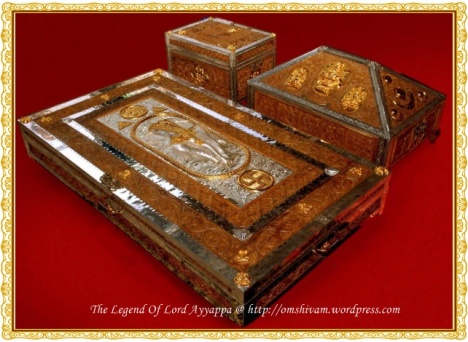
Thiruvanbharanam set comprises of three caskets. ie they are called main Thriuvabharanam box, the Velli Petti and the Kodi Petti.


Main Thiruvabaram Box : Box 1

The Main Thiruvabaranam box which is given into the Sactum Santorum of Sabarimala is suppose to have the following items in it... (and now we see only a very few of these)

Thirumugham - Face of Sastha
Prabha Mandalam
Valia Churika (Dagger - Big)
Cheria Churika (Dagger - Small)
Aana (Elephant) - 2 (idols)
Kaduva -(Tiger) 1 (idol)
Velli Kettia Valampiri Sankh - 1 (Conch shell right handed spiral - with silver)
2 Roopams of Poorna and Pushkala
Poothattam (A ceremonial plate for carrying flowers)
Navarathna Mothiram (Navarathnam ring)
Sarapoli Mala  - necklace
Vilwa Mala - necklace made of golden vilwa leaves
Mani Mala - necklace made of navaratna
Erukkum Poomala - necklace made of golden erukkum poo

Velli Petti : Box 2
Thaila Kudam for Kalasam
Pooja utensils

Kodi Petti : Box 3
Netti Pattom for the elephant
Flags of Talapara and Udampara
Mezhuvatta Kuda and other items for the elephant


Now coming to our Myth that its Ayyappan's own ornaments- how can Ayyappan wear a Golden Face mask ?  Though not found now, even the golden Vilwa mala is suitable only for decorating the Lord and not for wearing it normally...

And the Abharanams are meant for Sastha and not for Ayyappan's personal use( i mean during his human incarnation) because in the Thirumukham - face you find a wonderful Meesai - Mustache ( whereas Ayyappan's human life was maximum 12 or upto 16 years according to some other versions )

So the Abharanams are meant only for decorating the idol as instructed by Ayyappan and not actually used by Ayyappan...


And the Thiruvabharanams has the roopams of Poorna Pushkala which makes very clear that Sastha is with Poorna Pushkala - this might have been the original form which was installed earlier in Sabarimala..

Later after the human incarnation of Ayyappan - and destruction and resurrection of Sabarimala temple over a period of time, the present form of Yoga Sastha might have originated...

Everything said and done the Abharana Darshanam was a wonderful Vision of my life time... My mental state was in ecstasy and beyond description... and which gave a heart full of Satisfaction which will last long for ever


-------------------------------------
Thank to : Mr. Aravind  aravindsai@gmail.com
                https://shanmatha.blogspot.com/2011/02/thiruvabharanam.html 

சபரிமலை ஐயப்பனின் திருவாபரணம்


ஸ்ரீ மஹாசாஸ்த்ரு ப்ரியதாஸன்
ஸ்ரீ V. அரவிந்த் ஸுப்ரமண்யம்
94 B மூன்றாவது வீதி டாடாபாட், கோவை 641 012
(aravindsai@gmail.com)

( எனது கட்டுரை ஜனவரி 2012 திரிசக்தி இதழில் வெளியானது)


சபரிமலையில் மகர ஸங்க்ரமண நேரத்தில் ஐயப்பனுக்கு சார்த்துவதற்காக பந்தளம் அரண்மனையிலிருந்து திருவாபரணம் புறப்படும் கண் கொள்ளாக் காட்சியை வர்ணிக்க வார்த்தைகள் போதாது. வருடத்தின் மற்ற நாட்கள் முழுவதும் பந்தளம் அரண்மனையின் பொறுப்பில் பூட்டி வைக்கப்பட்டிருக்கும் திருவாபரணம் வருடத்தில் 5-6 நாட்களுக்குத்தான் வெளியே கொண்டு வரப்படுகிறது.

பந்தளம் அரண்மனையில், பூஜைகளை முடித்து சபரிமலை புறப்படுவதற்காக அரசர் உட்பட அனைவரும் காத்திருப்பார்கள். வானில் கருடன் வந்து திருவாபரணத்தை வட்டமிட்ட பிறகுதான் திருவாபரண யாத்திரை புறப்படும்.

இந்த ஆபரணப் பெட்டியை சுமப்பதற்காகவே பாரம்பரியமாகவே சில குடும்பங்கள் இருக்கிறார்கள். அவர்களே இந்த பெட்டிகளை சுமப்பதற்காக விரதம் இருந்து வருகிறார்கள்.

பந்தளம் அரண்மனையிலிருந்து தலைச்சுமையாக புறப்படும் திருவாபரண ஊர்வலத்தைக் காண வழியெங்கும் விளக்கேற்றி சாதி மத பேதமின்றி பக்தர்கள் காத்திருந்து வரவேற்பது மெய்சிலிர்க்க வைக்கும் அனுபவமாகும்.

சுமார் மூன்று நாட்கள் காட்டுவழியில் வந்து சேர்ந்த ஆபரணம் பெரியானைவட்டத்தை அடையும் போது உண்டாவது பரவசம்.

சரங்குத்தி கடந்து பதினெட்டாம் படியேறி ஆபரணம் சன்னிதானம் அடைவதைக் கண்டாலே ஆனந்தம்.

ஐயப்பனுக்கு திருவாபரணம் சார்த்தி காணக்கிடைக்கும் தரிசனம் - கண நேரம் மட்டுமே கிடைக்கும் அரிதான ஒரு தரிசனம்.

அந்த ஆபரணங்களைக் குறித்து அறிய பல பக்தர்களுக்கு ஆர்வம் இருக்காதா ? சபரிமலைமெய்யனின் ஒரு அளவிடமுடியாத திருவருளின் காரணமாய் ஒரு நாள் முழுதும் அந்த திருவாபரணங்களை கண்ணாரக் காணும் பாக்யம் கிட்டியது.

பந்தளம் அரண்மனையில்
கட்டுரை ஆசிரியர் அரவிந்த் ஸுப்ரமண்யம்


பந்தளம் அரண்மனையில்
கட்டுரை ஆசிரியர் அரவிந்த் ஸுப்ரமண்யம்

சுத்தமான பசுந்தங்கத்தால் ஆன அந்த ஆபரணங்கள், பன்னெடுங்காலத்துக்கு முன்பு, பந்தள மன்னனால் சபரிமலை சாஸ்தாவுக்காக செய்யப்பட்டது.

இந்த வருடம் சிறப்பு அழைப்பின் பேரில் பந்தளம் அரண்மனைக்கே சென்று ஆபரணங்களை ஒரு நாள் முழுக்க காணு அரிய வாய்ப்பு கிடைத்தது.


பந்தளம் அரண்மனையில்
கட்டுரை ஆசிரியர் அரவிந்த் ஸுப்ரமண்யம்
இந்த ஆபரணங்களைக் குறித்த சரியான தகவல்கள் பக்தர்களிடம் போய் சேராததால் பலரும் பலவிதமாக  கூறிவருகிறார்கள்.

நான் கோவிலருகே நின்று கொண்டிருக்கும் போது கூட சிலர் "இது ஐயப்பனே அணிந்து கொண்டிருந்தது" என்று கூறினார்கள்.

பலரும் நினைப்பது போல இது ஐயப்பன் அணிந்து கொண்டிருந்த ஆபரணங்கள் இல்லை. சபரிமலையில் கோவில் கொண்ட தர்ம சாஸ்தாவுக்காக பந்தள ராஜனால் உருவாக்கப்பட்ட ஆபரணங்கள்.

திருவாபரணப் பெட்டி ஊர்வலமாக வரும் போது கண்டிருப்போம்; மொத்தம் மூன்று பெட்டிகளைக் கொண்டது அது.

1. திருவாபரணப் பெட்டி
2. வெள்ளிப் பெட்டி
3. கொடிப் பெட்டி

இந்த திருவாபரணப் பெட்டி மட்டுமே ஐயப்பன் சன்னிதியை அடைகிறது. மற்ற இரண்டு பெட்டிகளும் மாளிகைப்புறத்தம்மன் சன்னிதிக்கு சென்று விடும்.


திருவாபரணப் பெட்டி - பெட்டி 1
ஐயப்பன் சன்னிதியில் கொடுக்கப்படும் முக்கியமான திருவாபரணப் பெட்டியில் தர்ம சாஸ்தாவை அலங்கரிக்க கீழ்காணும் ஆபரணங்கள் உள்ளது.

ஃ திருமுகம் - (சாஸ்தாவின் முக கவசம்)
ஃ ப்ரபா மண்டலம் (ப்ரபாவளி)
ஃ வலிய சுரிகை (பெரிய கத்தி)
ஃ செறிய சுரிகை (சிறிய கத்தி)
ஃ யானை - யானை விக்ரஹம் 2
ஃ கடுவாய் - புலி விக்ரஹம் 1
ஃ வெள்ளி கட்டிய வலம்புரி சங்கு
ஃ பூர்ணா - புஷ்கலா தேவியர் உருவம்
ஃ பூத்தட்டம் (பூக்களை வைக்கும் தங்க தட்டு)
ஃ நவரத்தின மோதிரம்
ஃ சரப்பளி மாலை
ஃ வில்வ மாலை (தங்க இதழ்களால் ஆனது)
ஃ மணி மாலை (நவரத்னங்களால் ஆனது)
ஃ எருக்கம் பூ மாலை (தங்க எருக்கம்பூக்களால் ஆனது)

வெள்ளி பெட்டி (பெட்டி 2)
வெள்ளிப்பெட்டி என்று அழைக்கப்படும் இந்தப் பெட்டியில்

ஃ தங்கக் குடம் ஒன்றும்,
ஃ மற்ற பூஜா பாத்ரங்களும் இருக்கின்றன

இந்த தங்கக்குடத்தால் ஸ்வாமிக்கு பின்னர் நெய்யபிஷேகம் செய்யப்படும்

கொடிப்பெட்டி (பெட்டி 3)

மாளிகைப்புறம் சன்னிதிக்கு செல்லும் இந்த கொடிப்பெட்டியில்,

ஃ யானைக்கான நெற்றிப் பட்டம்
ஃ தலைப்பாறை மற்றும் உடும்பாறை மலைக்கான கொடிகள்
ஃ குடை மற்றும் யானை ஊர்வலத்துக்கான பொருட்கள் உள்ளன

கொடிப்பெட்டியில் உள்ளவைகளால் மறுநாள் யானை அலங்கரிக்கப்பட்டு மாளிக்கப்புறத்து தேவி சரம்குத்தி வரையில் யானையில் பவனி வருவாள்

இந்த திரு ஆபரணங்கள் சபரிமலையில் கோவில் கொண்டுள்ள பகவானுக்கு அணிவிக்கவேயன்றி ஐயப்பன் தானே அணிந்து கொண்டிருந்தவையல்ல

திருவாபரணத்தில் வரும் சாஸ்தாவின் திருமுகத்தில் - அழகான முறுக்கு மீசை தெரிவதைக் காணலாம். அத்துடன் பூர்ணா புஷ்கலா தேவியரின் உருவமும் உடன் இருப்பதைக் காணமுடியும்.


இந்த ஆராய்ச்சியெல்லாம் ஒரு புறம் இருக்கட்டும்... ஆபரணம் சன்னிதானத்தை அடைவதை காண்பதே ஒரு பரவசமான அனுபவம் !

மகர நக்ஷத்ரம் உதித்து, " வானில் கருடன் வட்டமிட ", அந்த ஆபரணங்களை ஐயப்பனுக்கு சார்த்தி தீபாராதனை நடக்கும் நொடி பேரானந்தம்; அது வார்த்தைகளால் வர்ணிக்க முடியாத ஒன்று. அந்தக் கணமே பொன்னம்பல மேட்டில் ஜோதி தரிசனம் கிடைக்கும் நேரம் - அதுவே பரவசத்தின் எல்லை


ஸ்வாமியே சரணம் ஐயப்பா

-------------------------------------
தமிழகத்தில் திருவாபரணம்

சபரிமலை ஐயப்பனின் திருவாபரணம் மிக ப்ரத்யேகமான ஒன்று. அது பகவானின் நேரடியான உத்தரவின் பேரில் பந்தள ராஜனால் பலநூறு ஆண்டுகளுக்கு முன்பு உருவாக்கப்பட்டது. இதனைப் போல் வேறு எந்த இடத்திலும் அமைக்கப்படவில்லை. வேறு ஐயப்பன் கோவில்களுக்கு திருவாபரணங்கள் இருந்தாலும் அவை சபரிமலை திருவாபரணங்களைப் போல இருக்காது.

கடந்த ஆண்டு -  ஐயப்பனின் சந்நிதியில் கிடைத்த உத்தரவுப்படி,  கோவை மாவட்டத்திலுள்ள ஸ்ரீ மஹா சாஸ்த்ரு ஸேவா ஸங்கம், சபரிமலை திருவாபரணம் போலவே அச்சாக செய்ய தீர்மானித்தார்கள். வேலையை துவங்கிய அன்று இரவே ஸ்தபதியின் கனவில் ஐயப்பன் தோன்றி ஆசீர்வதித்த அற்புதமும், வெறும் ஏழே நாளில் அந்த திருவாபரணம் உருவான அற்புதமும் நிகழ்ந்தது. ஆக, சபரிமலை திருவாபரணம் போலவே அமைந்துள்ள திருவாபரணம் உலகிலேயே இது ஒன்று தான்.

பூஜையின் துவக்கத்திலேயே கருடனு வட்டமிட்டு வர அனைவரும் மெய்சிலிர்த்துப் போனார்கள். சபரிமலை போலவே வருடத்துக்கு ஒரே ஒரு நாள் ஸ்ரீ மஹா சாஸ்த்ரு ஸேவா ஸங்கத்தின் சாஸ்தா ப்ரீதி பூஜையின் போது இந்த திருவாபரணம் ஊர்வலமாக கொண்டு வரப்பட்டு தர்ம சாஸ்தாவுக்கு சார்த்தப் படுகிறது.

-------------------------------------
Thank to : Mr. Aravind  aravindsai@gmail.com
                 https://shanmatha.blogspot.com/2012/12/blog-post.html 

Saturday, December 15, 2012

Parvathamalai Girivalam 2012


With the blessings from the Acharyas of Kamakoti Peetam, It is proposed to organize a Girivalam of Parvathamali on 16-12-2012 (Margazhi 1st) in commemoration of the Girivalam performed by Paramacharya in the year 1944 on the same day. 


Wednesday, December 5, 2012

Mastan Swami Tiruvannamalai

Photo: Mastan Swami was born 1878 in Desur, about forty miles from Tiruvannamalai. He came from a Muslim family of weavers. Even in his childhood he experienced samadhi states. While plying the family loom, his hands and feet would suddenly stop and become absolutely still. 

Later he told Kunju Swami about his first meetings with Bhagavan:

“When I came to Bhagavan, he was seated like a rock outside Virupaksha Cave. (His unwavering gaze) was filled with grace, compassion and steady wisdom. I stood by his side. After giving me a look, he opened the gate of my Heart and I was also established in his state. I stood like that for eight hours, absolutely without fatigue, but filled with total absorption and peace. Bhagavan in those days used to open our heart with a simple gracious look, and it transformed us. There was no need for any questions since he made us, by his look, like himself.”

Bhagavan remarked about Mastan Swami to Viswanatha Swami:

“ All sorts of beings gravitate towards the presence of a jnani, devas (from heavenly realms), rishis, Brahmanishtas (established in Brahman), siddhas (perfected beings with supernatural powers) and yogis. Some come in a normal human form, but others turn up in their subtle, astral bodies. Some of these great beings show up in the guise of beggars or madmen, and some of them even appear in the forms of birds and animals.

“Among those who show up in a normal human body, and who subsequently stay on and become devotees, there is a huge range of spiritual attainment: complete beginners mix with highly advanced souls. The most advanced are ripe fruits, just waiting to fall. They only have to come into the presence of a jnani in order to plunge into a deep experience of the Self. One such devotee was Mastan.

“He was such a ripe soul, when he came to Virupaksha Cave to see me he would sometimes go into a deep samadhi before he had even entered the cave. As soon as he touched the railings of the gate, he would have a paralyzing experience of the Self. He would stand, rooted to the spot, unable to move, for six or seven hours. This happened several times. Usually, these experiences would happen before he had even seen me since I would be inside the cave, unaware what was going on at the gate.

“Mastan was in an entirely different category to most of the people who came. He was highly spiritual, although outwardly he looked like an ordinary man. He was kind and generous, always looking for an opportunity to help other people. He never showed any self-importance. On the contrary he liked to stay in the background, unnoticed and unappreciated by ordinary people.”

These samadhi states did not give him a full and permanent experience of the Self. When his mind reasserted itself, he went to Bhagavan for advice:

"Once, while I was on my way to see Bhagavan, I prayed for his grace. 

On my arrival at Virupaksha Cave he asked, ‘Do you like saguna upasana [meditation or worship of form], or do you like nirguna upasana meditation or worship of the formless]? 

I replied, ‘I only want nirguna upasana’. 

Bhagavan then told me, ‘Fix the mind in the Heart. If you keep your attention at the source from where all thoughts arise, the mind will subside at the source and reality will shine forth.’

I had already come across similar teachings in Maharaja Turavu, Mastan’s verses and Sukar Kaivalyam. I had also seen these instructions in several other books. I took a firm decision that this was the way for me. After this meeting with Bhagavan I had no further doubts about this. No doubts at all." (From B. V. Narasimha Swami’s interview)

"For some time, while I was meditating at night for about an hour, I used to hear the sound of a big bell ringing. Sometimes a limitless effulgence would appear. In 1922 when I visited Bhagavan at his new ashram at the foot of the hill, I asked him about this.

He advised me, ‘There is no need to concern ourselves about sounds such as these. If you see from where it rises, it will be known that it arises on account of a desire [sankalpa] of the mind. Everything appears in oneself and subsides within oneself. The light, too, only appears from the same place. If you see to whom it appears, mind will subside at the source and only reality will remain.’" (From Narasimha Swami’s interview.)

Mastan continued to visit Bhagavan throughout the 1920s, although his visits were less frequent than in earlier years.

The math that Mastan and Akhilandamma ran in Desur had been established to serve travelling sadhus, particularly those who were devotees of Bhagavan. The following story, narrated by Viswanatha Swami, indicates that Mastan took this responsibility very seriously:

In those days [the 1920s] some of Bhagavan’s devotees used to travel on foot to nearby towns such as Polur and Desur. We used to undertake these trips to visit devotees who lived in those areas. Bhagavan always gave us his permission before we undertook any of these trips. The members of the group would vary from trip to trip but we could usually count on devotees such as Kunju Swami, Ramaswami Pillai, ‘Nondi’ Srinivasa Iyer, Ramanatha Brahmachari and Ranga Rao to be enthusiastic about these adventures. I also went on many of these trips. Some of our expeditions would be to Cuddalore or Vellore, but most of them would be to locations in the Polur and Chengam areas.

When we travelled we would never stay in houses. When night came we would shelter in mantapams or caves. Sometimes we would just sleep under trees. We would beg for our food on the way. Sometimes people would give us provisions for a meal. If that happened we would stop and cook. If we received cooked food in our bowls, we would share it out equally among all the members of our group. Although we had a lot of fun, we were also aware that we were sadhus on a pilgrimage. As we walked we would chant scriptural works or meditate in silence. 

On some of these trips Mastan would somehow find out in advance where we were going. We would arrive at a town, Polur for example, and find him waiting for us. Once he had discovered our whereabouts, he would make us sit while he went out begging for us. We didn’t want to be served in this way, but Mastan was very insistent. He told us on these occasions that he was the ‘devotee of devotees’, a role and a title that he took on himself.

He would say, ‘I want to serve the devotees of Bhagavan. You must stay here while I find food for you.’ 

Mastan would generally return with a huge amount of food, far more than we could possibly eat. After we had eaten as much as we could, we would share the leftovers with any local people who lived nearby. If we were living in caves or other out-of-the-way places, we would give the leftovers to monkeys.

As he fed us Mastan would make one persistent request: ‘Please tell me some stories about the glory of our Master. Tell me everything he has said during the time I was not with him. To me, every word Bhagavan speaks is holy. The words that come out of his holy mouth are so powerful, merely listening to them can give liberation to ripe souls.’ (Unpublished story narrated to V. Ganesan by Viswanatha Swami)


Mastan passed away on 8th November 1931. When Bhagavan learned of Mastan’s passing away, he sent Kunju Swami to his village with full instructions on how to make a samadhi for Mastan. There is a Tamil book [Tirumular’s Tirumandiram] that faithfully gives the details of how saints who have followed Lord Siva have to be buried. In accordance with these details Bhagavan drew up a plan of the dimensions of the samadhi and sent it along with Kunju Swami. It seemed very strange to us that a Muslim should be given a Saiva saint’s burial and stranger still that Bhagavan, who did not generally encourage ceremonial rites, actually laid down in the minutest detail the rites to be followed in the samadhi of Mastan.

https://sri-ramana-maharshi.blogspot.com/2008/09/discovering-mastan.html


Mastan Swami was born 1878 in Desur, about forty miles from Tiruvannamalai. He came from a Muslim family of weavers. Even in his childhood he experienced samadhi states. While plying the family loom, his hands and feet would suddenly stop and become absolutely still.

Later he told Kunju Swami about his first meetings with Bhagavan:

“When I came to Bhagavan, he was seated like a rock outside Virupaksha Cave. (His unwavering gaze) was filled with grace, compassion and steady wisdom. I stood by his side. After giving me a look, he opened the gate of my Heart and I was also established in his state. I stood like that for eight hours, absolutely without fatigue, but filled with total absorption and peace. Bhagavan in those days used to open our heart with a simple gracious look, and it transformed us. There was no need for any questions since he made us, by his look, like himself.”

Bhagavan remarked about Mastan Swami to Viswanatha Swami:

“ All sorts of beings gravitate towards the presence of a jnani, devas (from heavenly realms), rishis, Brahmanishtas (established in Brahman), siddhas (perfected beings with supernatural powers) and yogis. Some come in a normal human form, but others turn up in their subtle, astral bodies. Some of these great beings show up in the guise of beggars or madmen, and some of them even appear in the forms of birds and animals.

“Among those who show up in a normal human body, and who subsequently stay on and become devotees, there is a huge range of spiritual attainment: complete beginners mix with highly advanced souls. The most advanced are ripe fruits, just waiting to fall. They only have to come into the presence of a jnani in order to plunge into a deep experience of the Self. One such devotee was Mastan.

“He was such a ripe soul, when he came to Virupaksha Cave to see me he would sometimes go into a deep samadhi before he had even entered the cave. As soon as he touched the railings of the gate, he would have a paralyzing experience of the Self. He would stand, rooted to the spot, unable to move, for six or seven hours. This happened several times. Usually, these experiences would happen before he had even seen me since I would be inside the cave, unaware what was going on at the gate.

“Mastan was in an entirely different category to most of the people who came. He was highly spiritual, although outwardly he looked like an ordinary man. He was kind and generous, always looking for an opportunity to help other people. He never showed any self-importance. On the contrary he liked to stay in the background, unnoticed and unappreciated by ordinary people.”

These samadhi states did not give him a full and permanent experience of the Self. When his mind reasserted itself, he went to Bhagavan for advice:

"Once, while I was on my way to see Bhagavan, I prayed for his grace.

On my arrival at Virupaksha Cave he asked, ‘Do you like saguna upasana [meditation or worship of form], or do you like nirguna upasana meditation or worship of the formless]?

I replied, ‘I only want nirguna upasana’.

Bhagavan then told me, ‘Fix the mind in the Heart. If you keep your attention at the source from where all thoughts arise, the mind will subside at the source and reality will shine forth.’

I had already come across similar teachings in Maharaja Turavu, Mastan’s verses and Sukar Kaivalyam. I had also seen these instructions in several other books. I took a firm decision that this was the way for me. After this meeting with Bhagavan I had no further doubts about this. No doubts at all." (From B. V. Narasimha Swami’s interview)

"For some time, while I was meditating at night for about an hour, I used to hear the sound of a big bell ringing. Sometimes a limitless effulgence would appear. In 1922 when I visited Bhagavan at his new ashram at the foot of the hill, I asked him about this.

He advised me, ‘There is no need to concern ourselves about sounds such as these. If you see from where it rises, it will be known that it arises on account of a desire [sankalpa] of the mind. Everything appears in oneself and subsides within oneself. The light, too, only appears from the same place. If you see to whom it appears, mind will subside at the source and only reality will remain.’" (From Narasimha Swami’s interview.)

Mastan continued to visit Bhagavan throughout the 1920s, although his visits were less frequent than in earlier years.

The math that Mastan and Akhilandamma ran in Desur had been established to serve travelling sadhus, particularly those who were devotees of Bhagavan. The following story, narrated by Viswanatha Swami, indicates that Mastan took this responsibility very seriously:

In those days [the 1920s] some of Bhagavan’s devotees used to travel on foot to nearby towns such as Polur and Desur. We used to undertake these trips to visit devotees who lived in those areas. Bhagavan always gave us his permission before we undertook any of these trips. The members of the group would vary from trip to trip but we could usually count on devotees such as Kunju Swami, Ramaswami Pillai, ‘Nondi’ Srinivasa Iyer, Ramanatha Brahmachari and Ranga Rao to be enthusiastic about these adventures. I also went on many of these trips. Some of our expeditions would be to Cuddalore or Vellore, but most of them would be to locations in the Polur and Chengam areas.

When we travelled we would never stay in houses. When night came we would shelter in mantapams or caves. Sometimes we would just sleep under trees. We would beg for our food on the way. Sometimes people would give us provisions for a meal. If that happened we would stop and cook. If we received cooked food in our bowls, we would share it out equally among all the members of our group. Although we had a lot of fun, we were also aware that we were sadhus on a pilgrimage. As we walked we would chant scriptural works or meditate in silence.

On some of these trips Mastan would somehow find out in advance where we were going. We would arrive at a town, Polur for example, and find him waiting for us. Once he had discovered our whereabouts, he would make us sit while he went out begging for us. We didn’t want to be served in this way, but Mastan was very insistent. He told us on these occasions that he was the ‘devotee of devotees’, a role and a title that he took on himself.

He would say, ‘I want to serve the devotees of Bhagavan. You must stay here while I find food for you.’

Mastan would generally return with a huge amount of food, far more than we could possibly eat. After we had eaten as much as we could, we would share the leftovers with any local people who lived nearby. If we were living in caves or other out-of-the-way places, we would give the leftovers to monkeys.

As he fed us Mastan would make one persistent request: ‘Please tell me some stories about the glory of our Master. Tell me everything he has said during the time I was not with him. To me, every word Bhagavan speaks is holy. The words that come out of his holy mouth are so powerful, merely listening to them can give liberation to ripe souls.’ (Unpublished story narrated to V. Ganesan by Viswanatha Swami)


Mastan passed away on 8th November 1931. When Bhagavan learned of Mastan’s passing away, he sent Kunju Swami to his village with full instructions on how to make a samadhi for Mastan. There is a Tamil book [Tirumular’s Tirumandiram] that faithfully gives the details of how saints who have followed Lord Siva have to be buried. In accordance with these details Bhagavan drew up a plan of the dimensions of the samadhi and sent it along with Kunju Swami. It seemed very strange to us that a Muslim should be given a Saiva saint’s burial and stranger still that Bhagavan, who did not generally encourage ceremonial rites, actually laid down in the minutest detail the rites to be followed in the samadhi of Mastan.

Thank to:Mr. Reinhard.e.jung
https://sri-ramana-maharshi.blogspot.com/2008/09/discovering-mastan.html